
AI-written homework can look polished, organized, and completely detached from the student who submitted it. A detector may add useful information, yet the score alone cannot answer the authorship question. The practical task is to examine the work, understand the tool’s limits, and give the student a fair chance to explain the process.
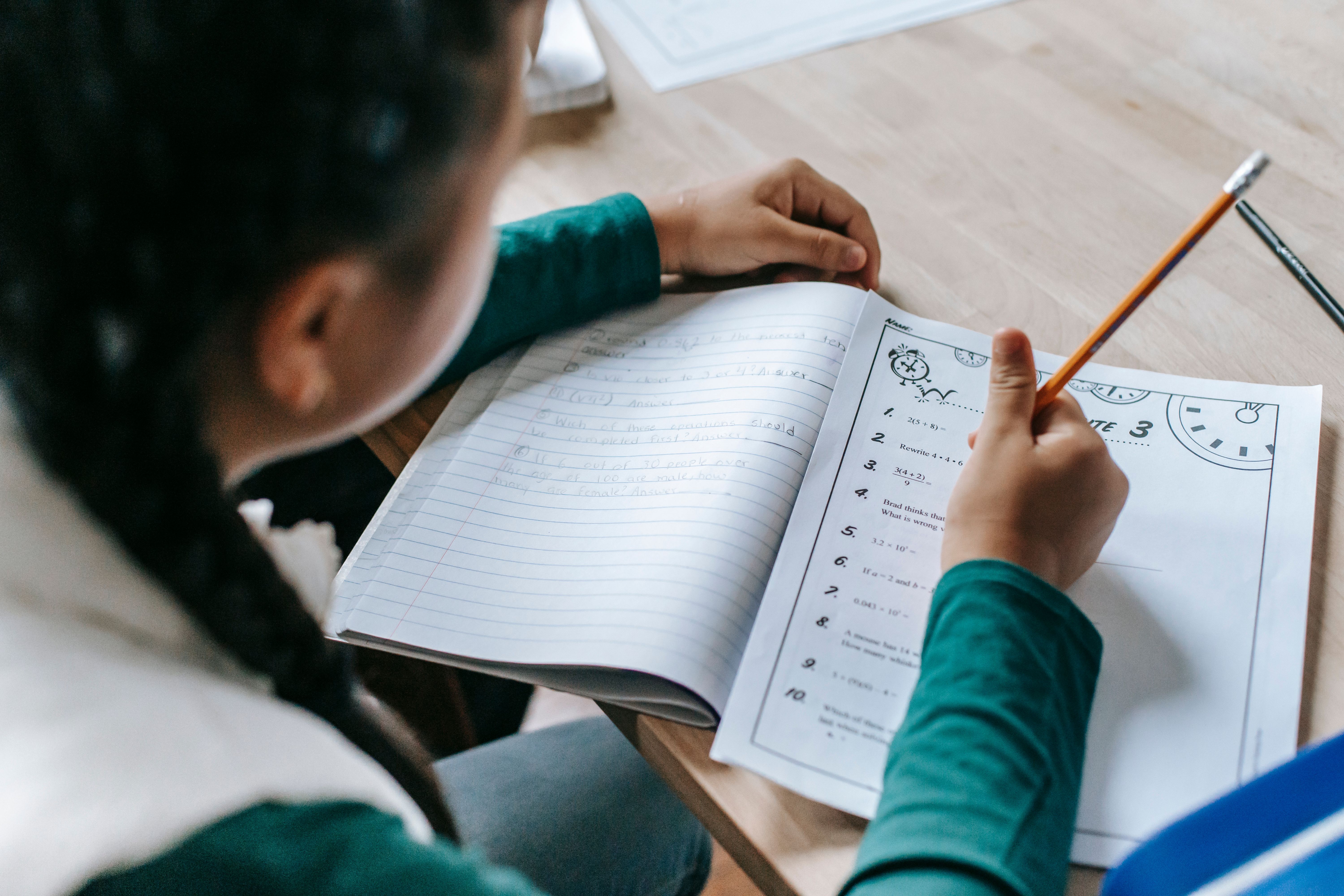
Start with the writing, not the percentage
When teachers ask how teachers can spot AI in homework, they often begin with a percentage from an online checker. A better starting point is the submitted work itself. Look for a cluster of specific signals:
- A sudden change in vocabulary, sentence length, or level of formality compared with the student’s earlier work.
- Broad claims supported by vague or nonexistent sources.
- Examples that sound plausible but do not answer the exact assignment prompt.
- Paragraphs that are grammatically smooth while the reasoning remains thin or repetitive.
- References, quotations, or page numbers that cannot be verified.
- A conclusion that introduces ideas the body never developed.
None of these details proves AI use. A student may have received tutoring, revised carefully, used a spellchecker, or written in a new style. The details justify a closer look, not an immediate penalty.
What AI detection tools actually tell you
AI detectors estimate whether patterns in a passage resemble text generated by a language model. They do not retrieve a hidden record of the student’s prompts, identify a specific chatbot with certainty, or establish who typed each sentence.
Turnitin’s current AI Writing Report guidance says its model can misidentify human-written, AI-generated, and AI-paraphrased text. The same guidance says the report should not be the sole basis for adverse action. It also notes that reports require at least 300 words of prose and that short-form writing, code, tables, and some other formats are outside the model’s reliable detection scope.
That makes the result a screening signal. A high score can justify a conversation and a review of evidence already available in the class. A low score does not certify human authorship, especially when a student has edited, translated, or heavily revised a passage.
A fair detection workflow for teachers
Here is a workable process for how teachers can spot AI without turning an uncertain prediction into a verdict.
- Check the assignment context. Ask whether the prompt invited generic answers. A broad five-paragraph essay is easier to outsource than a response tied to a class discussion, local observation, lab result, or assigned source.
- Compare authentic samples. Review in-class writing, outlines, drafts, discussion notes, and earlier assignments. Focus on meaningful changes in reasoning and voice, not spelling alone.
- Verify the content. Open cited sources. Check quotations, page numbers, dates, calculations, and named examples. Fabricated citations are concrete evidence of a quality problem, although they still do not identify the person or tool responsible.
- Run a detector only when policy permits. Use an institution-approved service where required. Read its explanation and confidence language. Record the result as one piece of evidence.
- Invite an explanation. Ask the student to describe how they chose the topic, built the argument, used sources, and revised the draft. Keep the tone investigative and specific.
- Apply the written policy. Decide whether the conduct matches the course or school rule, then follow the required process for documentation, response, and appeal.

Use a free checker carefully
A teacher who wants an additional screening signal can try an AI checker free tool on a qualifying passage. Treat the output as provisional. Free services can change their models, limits, language support, and data practices, so teachers should check school policy before uploading student work.
Never paste sensitive student information into an unapproved service. Remove names and identifying details when a policy allows testing, and keep the original assignment file separate from any copied text. Ask the school or district who may retain submissions, how long they are stored, and whether the service uses them for model training.
The false-positive problem is serious
Research published in Patterns tested seven GPT detectors against 91 TOEFL essays written by non-native English speakers and 88 essays from a US eighth-grade dataset. The study reported an average false-positive rate of 61.3% for the TOEFL essays. At least one detector flagged 97.8% of those essays as AI-generated. The researchers connected this pattern to linguistic features that detectors may interpret as predictable language.
This matters for multilingual learners, students with distinctive writing patterns, and anyone who has received substantial language support. A polished or predictable sentence is not evidence of dishonesty. A detector score that conflicts with the student’s history deserves especially careful handling.
For that reason, how teachers can spot AI should include a bias check. Before contacting a student, ask whether the concern comes from authorship evidence or from a style that differs from the teacher’s personal expectations.
How to hold the student conversation
Keep the meeting anchored to observable details. You might say:
“I noticed that this assignment differs from your earlier writing in several ways. I also found two sources I could not verify. Walk me through how you planned and revised this section.”
That opening gives the student room to show drafts, browser history, notes, or an explanation of permitted tools. It also avoids presenting a probabilistic score as a settled fact.
Ask questions tied to the submitted work:
- What was your first idea for the thesis?
- Which source changed your view of the topic?
- Why did you choose this example?
- What did you revise after feedback?
- Which tools did you use, and what did each tool do?
Document the student’s answers and the evidence reviewed. If the school procedure requires a formal referral, include the assignment, comparison samples, source checks, detector report, and meeting notes. Avoid describing the detector as proof.

Redesign assignments so authorship becomes visible
The strongest answer to how teachers can spot AI is to collect evidence of thinking during the assignment. Ask for a proposal, source evaluation, outline, rough paragraph, revision memo, and short reflection. Each stage creates a record of decisions that a final polished page cannot provide.
Use prompts that require course-specific knowledge. A student might connect a reading to a class experiment, explain a local example, annotate a source, or defend a decision made during a project. These tasks give the teacher more context and give generic generated text less room to pass as completed learning.
State the permitted uses of AI in plain language. A policy might allow brainstorming or grammar feedback while requiring disclosure and prohibiting generated sentences in a final response. Students need to know whether they should cite a tool, attach a transcript, or describe its role in a process note.
UNESCO’s Guidance for generative AI in education and research frames the issue around human agency, privacy, ethical validation, and age-appropriate use. That perspective is useful for classroom policy because it keeps the focus on learning conditions, student rights, and teacher judgment.
Five questions teachers ask about AI homework
Can a detector prove that a student used ChatGPT?
No. A detector produces an estimate based on text patterns. It cannot prove which tool was used or who produced the text.
Should one high score trigger a failing grade?
No. Review the assignment, drafts, sources, comparison samples, and student explanation under the school’s academic integrity process.
Are human-written papers ever flagged?
Yes. False positives are documented, including serious concerns for non-native English writers. Treat every score as fallible.
How much text should a teacher submit to a detector?
Follow the specific tool’s requirements and school policy. Turnitin’s guidance says its AI report requires at least 300 words of prose and has limited reliability for several non-prose formats.
What is the best evidence of genuine student work?
A sequence of planning, drafting, source use, revision, and explanation provides stronger context than a single automated percentage.
The practical standard
Teachers do not need a perfect machine to respond responsibly to AI-written homework. They need a repeatable process that protects learning and due process at the same time.
How teachers can spot AI comes down to triangulation: compare the work with known samples, verify its claims, examine the writing process, use detection tools within their limits, and speak with the student before reaching a conclusion. That standard takes more attention than copying a percentage into a gradebook. It also produces a decision that a student, family, administrator, or appeals panel can understand.
How this guide was put together
This guide draws on Turnitin’s current report guidance, the 2023 Patterns study of detector bias against non-native English writers, and UNESCO’s education guidance on generative AI. These sources were checked in October 2026. Tool behavior, school policies, privacy terms, and detector thresholds can change, so teachers should recheck their institution’s approved services and academic integrity rules before using a report in a student case.